What we donate
We donate anything that is clean, complete and still usable: furniture, crockery, linen, clothes, books, toys and small appliances in working order. Sorting starts on the first day of the job: each room is cleared by separating what can be used again from what must be recycled.
An item is donated if it can go back into use without major repair. In practice, we set aside:
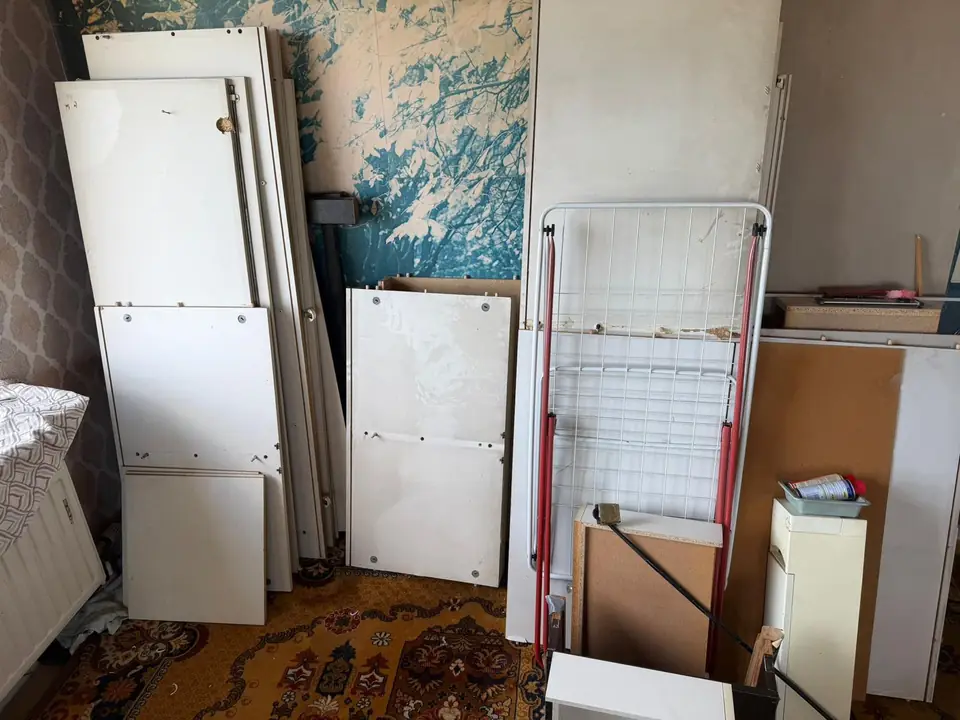
- furniture in good condition: tables, chairs, flat-pack wardrobes, chests of drawers, shelving;
- crockery, pots and pans, cutlery and kitchen utensils;
- household linen, clothes and shoes in good condition;
- books, records, games and complete toys;
- decorative items, frames and lamps;
- small electrical appliances that work.
The organisations remain free to accept or decline what we offer, depending on their needs and space. Anything they decline joins the recycling streams.
Who receives the donations?
Donations go to charities and social-economy enterprises (for example Les Petits Riens, Oxfam, Terre or De Kringwinkel in Flanders), depending on what they accept. These organisations sell the items at low prices in their second-hand shops, funding training jobs and community projects.
Which organisation receives them depends on the region where the property is, the type of items and what each organisation accepts at the time of the job. We claim no exclusive partnership: we work with the social-economy organisations that can actually take the items.
If you would like certain items to go to a specific charity, a school, a neighbour or a family member, tell us during the visit: we set them aside and hand them to you, or leave them at the agreed place.
Sorting and recycling streams
Anything that cannot be donated is sorted by material, because sorted waste recycles better and costs less to process than mixed waste. On our jobs, we separate at least the following streams:
- Wood: broken furniture, panels, chipboard, doors and planks, sent for wood recycling.
- Metal: bed bases, radiators, tools, bed frames and scrap, which go into metal recycling.
- Electrical and electronic equipment: fridges, washing machines, televisions, computers and small appliances that no longer work, handled through Recupel channels, the Belgian collection and recycling scheme for such equipment.
- Textiles: anything no longer wearable goes to textile collection for further processing.
- Paper and cardboard: worthless archives, boxes and magazines, recycled once personal documents have been set aside.
- Mattresses: handled separately, through a dedicated recycling stream where one exists in the region.
- Hazardous waste: paint tins, solvents, cleaning products, batteries and light bulbs, kept apart and handed to an approved collector.
What remains, which can be neither donated nor recycled, goes as residual waste to a waste processing facility. We never take waste from our jobs to municipal recycling parks, which are reserved for residents.
How the value of your belongings lowers the price
At Sparkling Services, the value of reusable or resellable furniture and items is deducted from the cost of the clearance, and it is shown in the quote. Putting an item back into circulation means less waste and a lower bill.
Depending on that value, there are three options: the clearance is free when the value covers the cost, we pay you the difference when it is higher, and you pay a fixed price on quotation when there are few or no items of value. Items with no market value but still usable are donated to social enterprises, and the rest is recycled. For a particularly valuable piece, you can also consult an independent expert before we arrive.
How donation and sorting lower your price
The better a clearance is sorted, the less it costs: donated items and recyclable materials avoid the processing costs of mixed waste. Processing residual waste is one of the major costs of a clearance. Every piece of furniture that goes to a charity and every cubic metre of sorted wood or metal reduces that volume.
That is why we always sort, even when throwing everything into a skip would be faster. This method, combined with an accurate estimate in cubic metres and the deduction of the value of resellable items, lowers the price and can even make the clearance free. The site visit is free and the quote is free with no obligation. The quote states what is included: labour, transport, sorting, donations, recycling and the final sweep.
What we cannot take
Some waste needs a dedicated channel or a specialist company, and we do not take it with the rest of the clearance. We point it out during the visit and explain what to do:
- Asbestos: corrugated sheets, pipes, old floor coverings or suspect lagging must be removed by a specialist contractor. In Flanders, an asbestos certificate is also required to sell many older buildings.
- Ammunition and explosives: do not touch them and call the police, who bring in the army's bomb disposal service.
- Medicines: these go back to a pharmacy.
- Gas cylinders: these go back to the supplier or point of sale.
- Medical or infectious waste and large quantities of chemicals, which require specialist collectors.
For heavily hoarded or unsanitary homes, we assess the situation during the visit and plan the protection and cleaning required.
What you can do before we arrive
The most useful thing is to set aside what you want to keep or give away yourself, and to tell us about any special items. Clearly mark the furniture and boxes that are staying, gather important documents and let us know about any hazardous products, a safe or bulky appliances.
There is no need to start sorting or carrying things yourself: that is our job, and we do it following the streams described above. Photos, paperwork, jewellery and keepsakes we find during the clearance are set aside and returned to you.