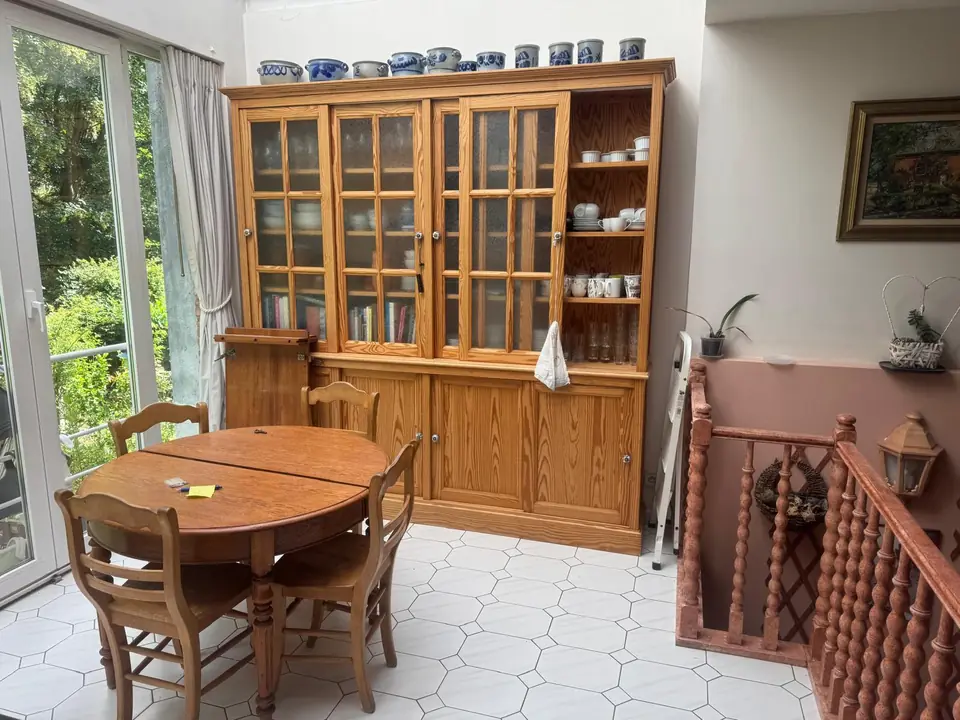
In East Flanders, clearing a home can mean emptying a student room in Ghent just as much as a small farmhouse in a Waasland village.
Ghent, the provincial capital and, with more than 270,000 residents, the second city of Flanders, has many old townhouses, walk-up flats, small workers' houses in Brugse Poort or Ledeberg and countless student rooms that empty out every summer. Its circulation plan splits the centre into sectors linked only via the R40 ring road, so the truck's route is worked out before the clearance day. Elsewhere the picture changes: shop-houses and working-class streets along the Dender in Aalst and Ninove, townhouses around the huge market square of Sint-Niklaas, small farmhouses along the Scheldt and the Durme in Dendermonde and Lokeren, and riverside villas on the Leie in Deinze, which merged with Nevele in 2019 and now has 16 sections. Recent mergers, such as Lokeren with Moerbeke in 2025, have also redrawn municipal boundaries. Waste is managed by several intercommunales: IVAGO in Ghent, ILvA around Aalst and Ninove, MIWA in the Waasland, Verko around Dendermonde, IDM in Lokeren and IVM in the Meetjesland and Deinze. Their recycling parks are there for residents; Sparkling Services does not take waste from its jobs there and works with licensed processors, after reusable items have gone to the social economy. We speak Dutch, French and English, request the parking ban from the city or municipality and hand back an empty, swept property, with photos if you cannot be there yourself.
- In Ghent, the circulation plan means trucks must use the R40 ring road to move between sectors.
- Six intercommunales manage residents' waste: IVAGO, ILvA, MIWA, Verko, IDM and IVM.
- Deinze has 16 sections since merging with Nevele, and Lokeren has included Moerbeke since 2025.
- Ghent's student rooms mostly empty out in summer, the busiest time for small clearances.