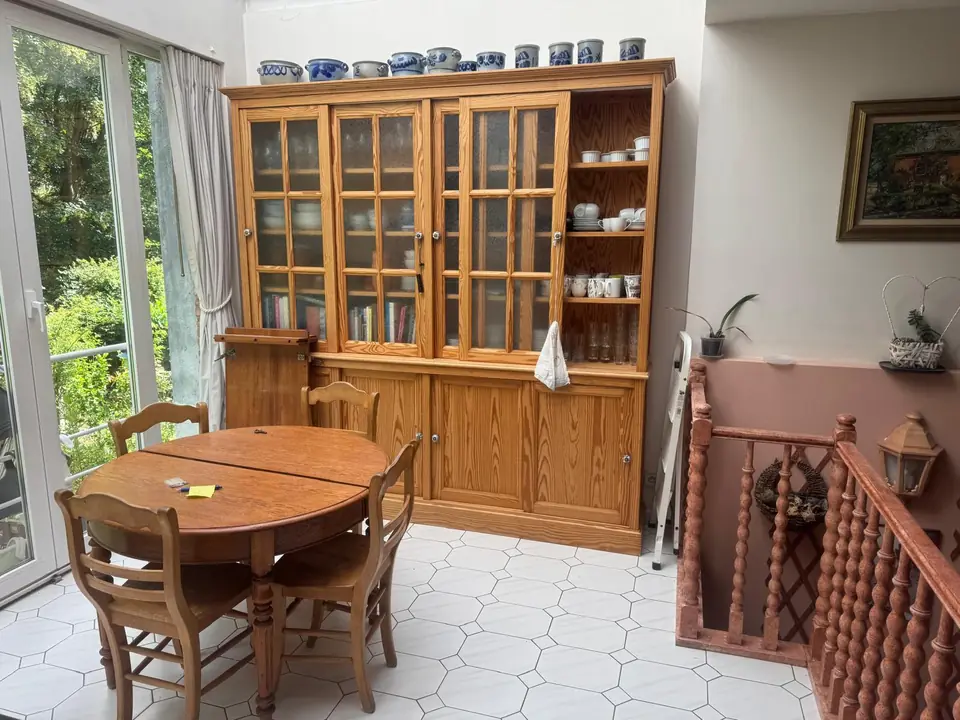
The Province of Namur stretches from the Hesbaye plains to the valleys of the Meuse, and most of our clearances there take place outside the big towns, in roomy houses with a cellar, attic and outbuildings.
Namur, the provincial capital and capital of Wallonia, is a case of its own: with 25 sections, it is as much a collection of villages as a city. At the confluence of the Sambre and the Meuse, the Corbeille and Salzinnes have old townhouses and flats, often on narrow streets where parking needs preparing; Jambes and Saint-Servais have terraced houses, and Wépion, Malonne or Temploux have villas and former farmhouses. Gembloux combines student rooms around its agronomy campus with commuter housing estates and big courtyard farms in the surrounding villages. In Dinant, narrow stone houses line up between the Meuse and the cliff, while the plateaus of Sorinnes, Lisogne or Falmignoul are home to farms and village houses. The reasons are the same as anywhere: an inheritance, a move into a care home, a sale or the end of a tenancy, often with heirs living in Brussels or Flanders. For waste, residents across the province use the recyparcs run by BEP Environnement, the Namur intercommunale. These sites are reserved for households: Sparkling Services takes nothing there on its jobs. We first donate whatever can be reused to social-economy organisations, then hand the rest, sorted by material, to licensed processing channels. We work in French, Dutch and English, arrange road occupation with the municipality, match the vehicle to country roads and hand the property back empty and swept.
- Namur has 25 sections: many clearances take place in villages such as Wépion, Malonne or Temploux.
- BEP Environnement runs the recyparcs across the whole Province of Namur.
- In Dinant, houses squeezed between the Meuse and the cliff leave little room to park a truck.
- The courtyard farms in Gembloux's villages are often the largest volumes in the province.