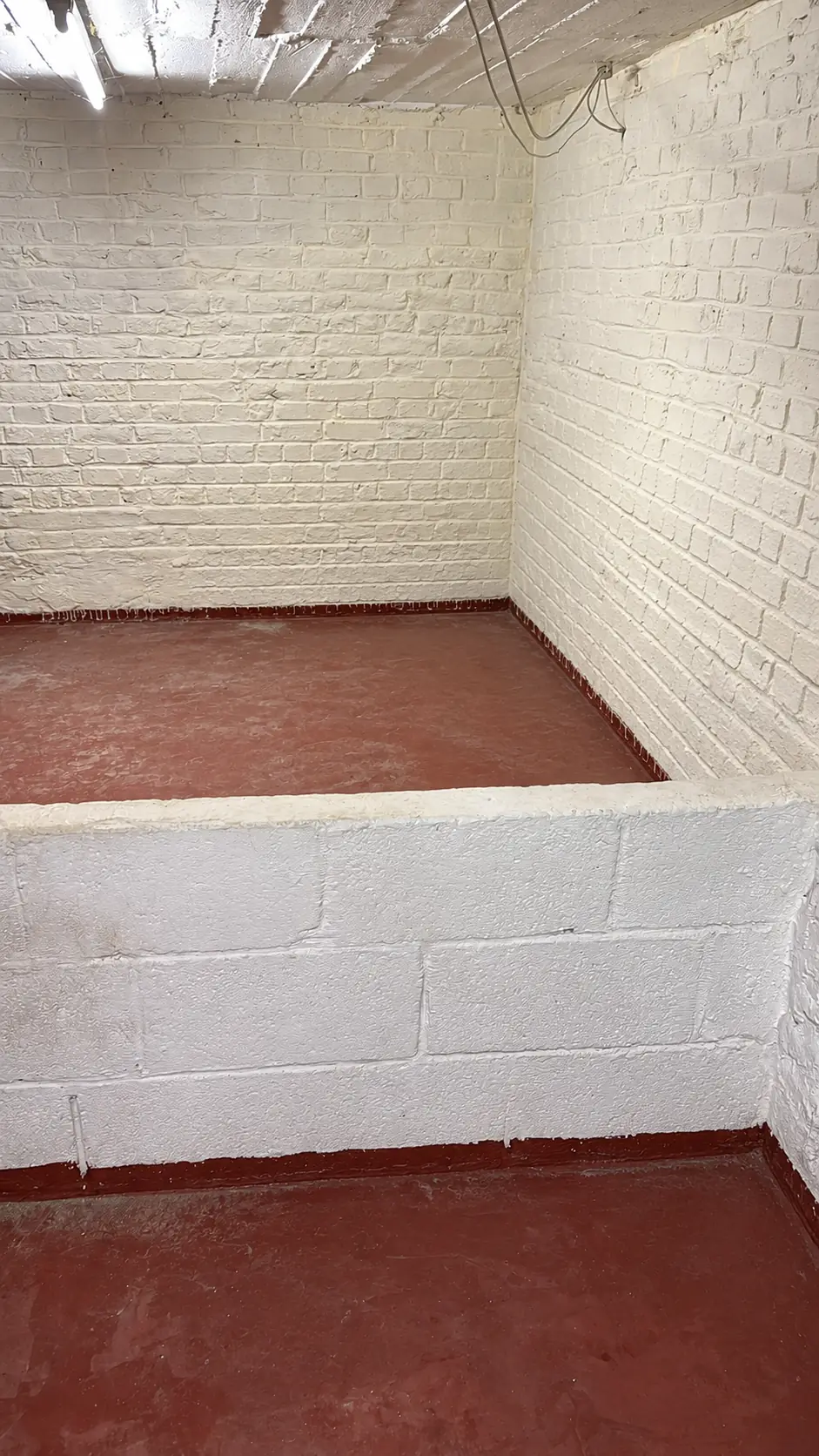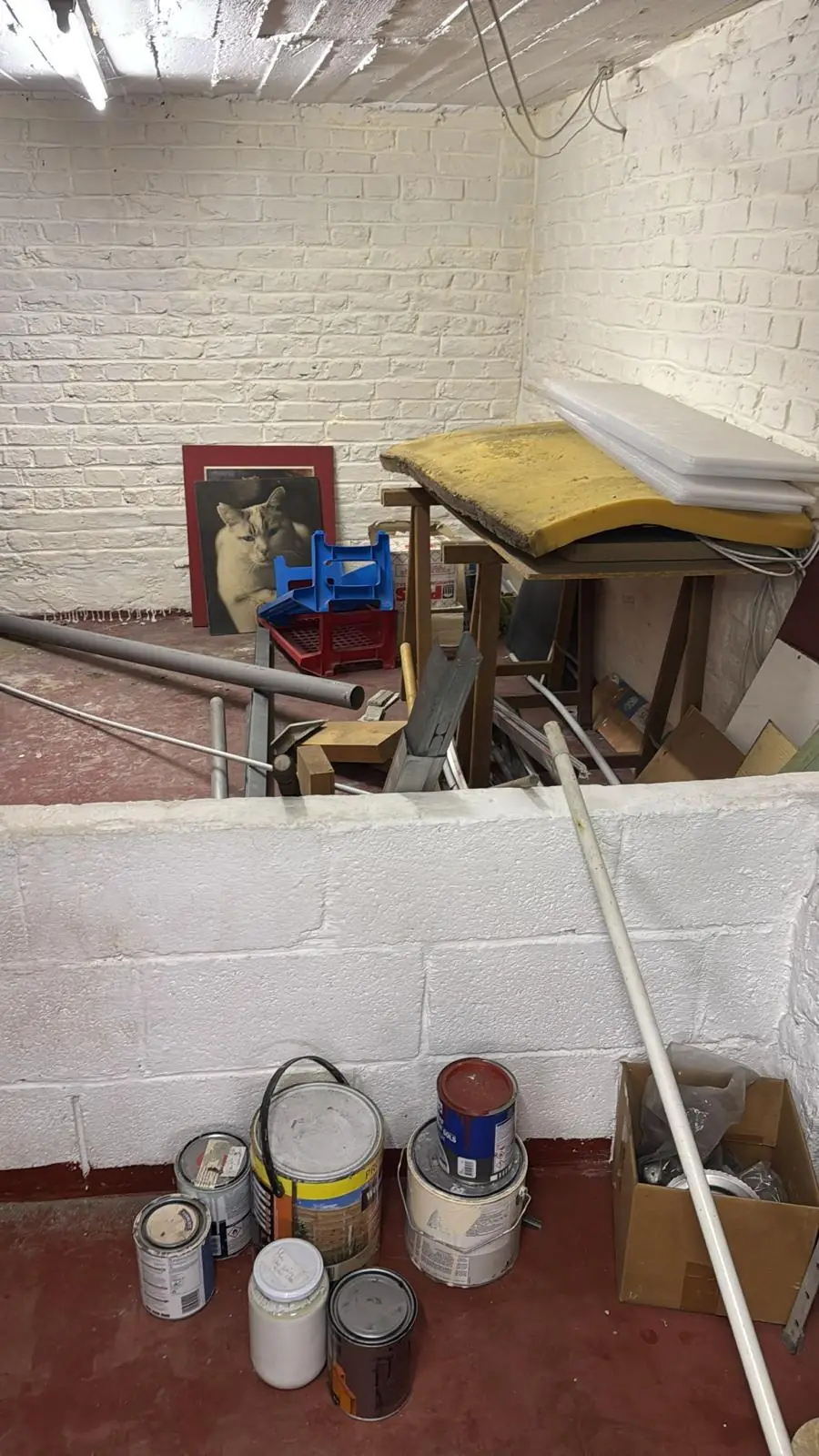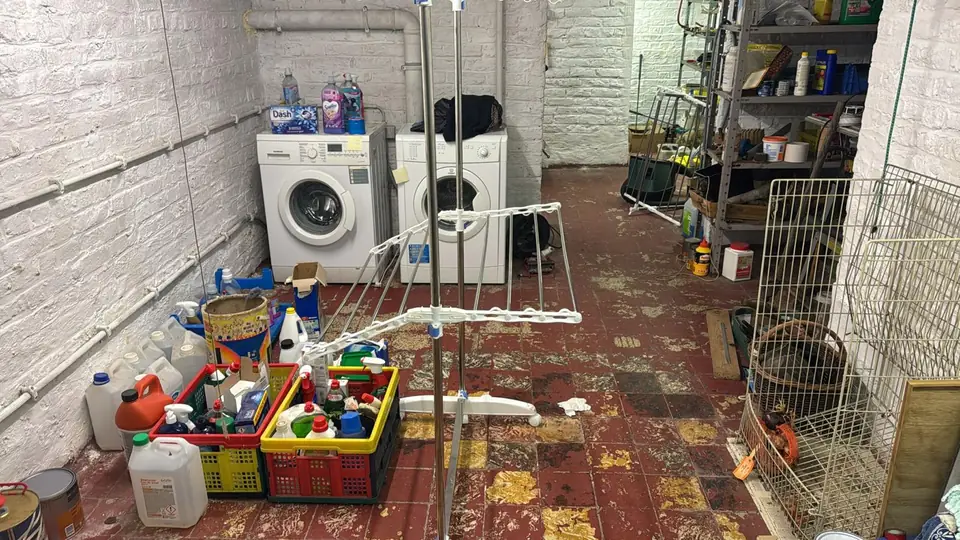
Basement clearance is our everyday work: Sparkling Services empties house cellars and private storage cellars in apartment buildings in Brussels, Flanders and Wallonia, from low brick vaults to flooded basements. We carry every item up the stairs, bag anything damp or mouldy, set aside whatever has value and leave a swept floor. A free visit or a photo estimate via WhatsApp, a written quote with no obligation: depending on the value of what is stored down there, the clearance is free, we pay you the difference, or you pay a fixed price.
Basement clearance: what we take care of
A cellar is not like other rooms. You only go down a few times a year, the light is poor and the air is cool and often damp. That is exactly why it fills up without anyone noticing: a moving box that was never opened, a child's bike, grandmother's jam jars, an old boiler, crates of empty bottles. Ten or thirty years later, the cellar is full up to the light well.
Our work covers the whole job: assessing access and volume, sorting with you what should be kept, carrying everything up the stairs, loading, sending items to reuse and recycling, and finally sweeping the floor. You carry nothing and take nothing to the recycling centre yourself.
What we find in a Belgian cellar
- Jars and preserves: jam, preserved vegetables, jars with an unreadable date.
- Bottles: empty crates, old bottles of wine or spirits, sometimes a real collection.
- Soaked boxes: books, clothes, papers and toys damaged by moisture.
- Retired furniture: chipboard wardrobes, metal shelving, mattresses, chairs.
- Heating leftovers: a removed boiler, radiators, a coal store, a heating oil tank.
- DIY supplies: paint tins, cans, tools, leftover tiles or timber.
Vaulted cellar, private storage cellar, full basement: three different jobs
In Belgium, the word cellar covers very different spaces, and each one changes how the clearance is organised.
The brick-vaulted cellar of an old house
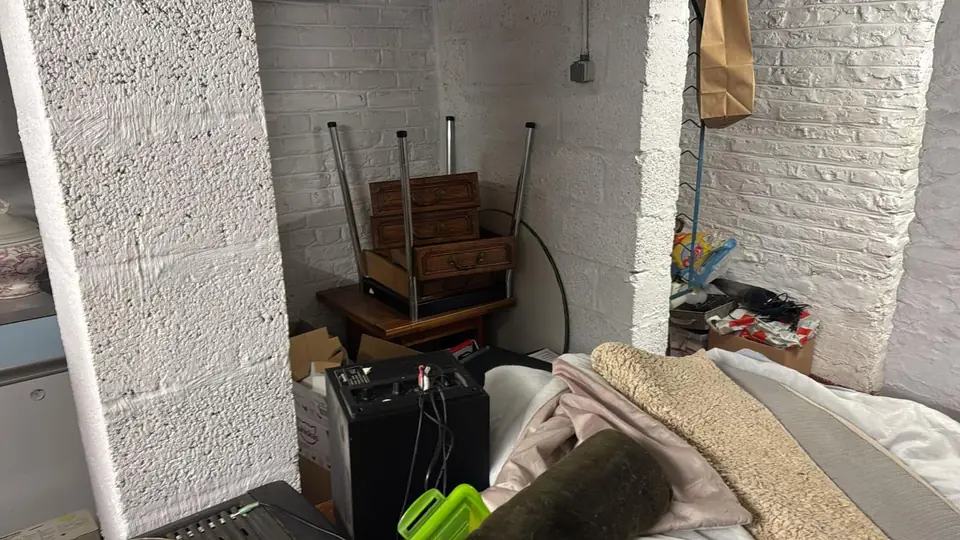
Beneath nineteenth and early twentieth-century houses in Brussels, Liège or Ghent, the cellar is a series of small brick vaults, sometimes on two levels, linked by a narrow stone staircase. You often have to stoop, and the inner doorways are low. Large furniture was sometimes assembled down there: it only comes back up once dismantled.
The private storage cellar in a block of flats
In an apartment building, each flat usually has a numbered storage compartment, closed by a wooden door or wire mesh, along a shared corridor. The clearance is arranged with the managing agent (syndic): access by badge or key, permitted hours, protection for the lift and entrance hall. We only touch the compartment you point out and sweep the corridor as we leave. Items abandoned in the common areas are the managing agent's responsibility: we only remove them at their request.
The full basement of a more recent house
In detached houses built between the 1960s and the 1990s, the full basement often combines cellar, laundry room, boiler room and sometimes a garage. Access is easier, but volumes are larger: a garage ramp or an outside door speeds up loading considerably.
Damp cellars, mould and soaked cardboard
Damp is the number one problem in cellars, especially near rivers and in older houses without ventilation. It changes how we work, and sometimes the value of what is stored.
- Wet boxes tear as soon as you lift them: we empty them into heavy-duty bags or crates before carrying them up.
- Chipboard swells and crumbles: that furniture can no longer be reused and goes to wood recycling.
- Mouldy textiles and mattresses are wrapped on site, so spores are not spread through the stairwell and the rest of the house.
- Important papers found damp (deeds, photos, letters) are set aside in a crate and handed back to you, even if damaged.
Our crew works with gloves, masks and lighting, and airs the cellar where possible. We remove the moisture trapped in the items, but we do not treat its cause: leaks, rising damp or condensation are a matter for a building professional. An empty, swept cellar also lets them make a far more reliable diagnosis.
Dry rot, saltpetre and mould: what you need to know
Clearing a damp cellar often reveals what the clutter was hiding: stains on the walls, damaged timber, a mushroom smell. Our job is to clear the cellar properly; diagnosis and treatment belong to other professionals. Here is how to tell the three most common situations apart.
- Mould: black, green or grey patches on boxes, wood and walls, with a musty smell. It mostly points to poor ventilation or condensation. Affected items are wrapped on site and removed.
- Saltpetre: a white, powdery deposit, sometimes fine crystals, at the foot of the walls. These are salts left behind by moisture rising through the masonry. It does not harm your belongings, but the damp needs to be tackled at its source.
- Dry rot: a wood-destroying fungus recognisable by white, cotton-wool growth, greyish strands spreading over the masonry, orange-brown fruiting bodies and fine rust-coloured dust. Affected timber cracks into small cubes.
If you suspect dry rot, do not scrape it or move the affected wood yourself: call a building pathology expert or a specialist treatment company, who will mark out the affected area. We then adapt the clearance: contaminated elements stay in place if the expert asks, and everything else comes out without spreading spores through the house. Check with your insurer what your policy covers and, if you rent, inform your landlord. An empty cellar always makes the inspection easier.
Rats, mice and insects in the cellar
A cluttered cellar that nobody visits gives rodents and insects both shelter and food: cardboard, forgotten sacks of potatoes, pet food, old textiles. Their presence does not stop us from clearing, but it does change the order of work.
Signs to look for
- droppings along the walls, gnawed boxes, greasy marks at the base of the walls;
- scratching noises, a lingering smell of urine, nests of shredded paper;
- for insects: silverfish, woodlice, pantry moths in stored food, more rarely cockroaches.
Treat before or after the clearance?
With an active rat or mouse infestation, it works best if a pest control specialist comes first: we do not lay bait or set traps. Some municipalities also offer a rat control service, so check with yours. The clearance then follows and removes the hiding places. For ordinary insects the reverse order works better: an empty cellar is easier to treat.
During the job, the team wears gloves, dampens droppings before picking them up and never sweeps them dry. Soiled food and textiles are bagged and removed. After we leave, have holes filled and light wells fitted with mesh, or the visitors will come back.
Steep stairs, low ceiling, light well: access decides everything
In a basement clearance, volume matters, but access matters even more. Carrying one cubic metre up a straight, well-lit staircase is nothing like bringing the same volume up a spiral staircase sixty centimetres wide.
What we check before quoting
- The width, steepness and condition of the steps, and whether there is a handrail.
- The headroom under the ceiling and under the inner doorways.
- The route from the foot of the stairs to the street: hallway, kitchen, courtyard, building entrance.
- Whether there is a direct exit: cellar door onto a yard, a ramp, an old coal hatch.
- The lighting and the sockets available.
On the day, we clear the staircase first, set up lighting, then form a carrying chain with light loads. Old steps and hallway tiles are protected. When a piece of furniture does not fit, we dismantle it rather than force it. For a cellar in a block of flats, we book the lift with the managing agent and protect the car.
What happens to the items from your cellar?
Everything that comes out of the cellar is sorted on site, category by category, before loading. Nothing leaves unsorted.
- Full bottles of wine and spirits: we go through them with you; an interesting stock can count towards the quote.
- Empty bottles and jars: glass recycling; jars that are still full are emptied, contents and glass separated.
- Bikes, tools, furniture in good condition: offered for reuse, notably to social-economy organisations (for example Les Petits Riens or De Kringwinkel), depending on what they accept.
- Metal: shelving, radiators, a disconnected old boiler, bike frames, to metal recycling.
- Damaged wood and chipboard: wood recycling stream.
- Dry paper and cardboard: paper recycling; personal documents set aside for you.
- Electrical appliances: old freezers, washing machines, dehumidifiers, to the dedicated appliance collection.
- Damp or mouldy materials: wrapped and removed as non-recyclable waste.
Anything that cannot be reused goes to suitable recycling channels (recycling centres, sorting facilities), material by material.
Paint, coal, heating oil tanks and asbestos: the special cases
The cellar is where a house hides most of the products that cannot leave with everything else. We spot them during the visit or on your photos.
- Paint, solvents, treatment products, oils, batteries: kept apart, labelled where possible and sent to a specific hazardous-waste collection.
- Gas cylinders and fire extinguishers: set aside, never compacted, and taken to the appropriate take-back point.
- Coal store: coal residue, dust and small rubble are collected and removed, with masks and gloves; the room is swept.
- Heating oil tank: emptying, cleaning, decommissioning or removing it is work for specialist firms, under regional rules. We clear the cellar around it and advise you to call in a specialist before or after our visit.
- Asbestos: old pipe lagging, fibre-cement sheets or floor coverings may contain it. We never touch it: we flag it and refer you to a licensed asbestos removal firm.
How much does a basement clearance cost?
We do not publish rates, because two cellars of the same volume can involve very different work. The price reflects volume, access (stairs, headroom, distance to the truck), damp and special waste. It also reflects the value of what we can reuse or resell, which leads to one of our three options:
- Free clearance: the value of reusable items (bikes, tools, antique furniture, bottles) covers the cost of the job.
- We pay you the difference: when that value exceeds the cost, for example a cellar holding a good wine stock or sought-after antique furniture.
- Fixed price on quotation: for a cellar mostly full of damaged boxes, damp materials or waste, you pay the price in the quote, with no extras on the day.
The visit is free, and so is the written quote. For a simple cellar, a few photos of the stairs and of each room, sent via WhatsApp or the form, are often enough to prepare the quote.
Timing and duration of a basement clearance
After your request, the visit usually takes place within 48 hours; a photo estimate can be quicker. We then agree the date with you, and the clearance itself often takes a morning or a day for a house cellar. A vaulted cellar with several rooms, a full basement or a very damp cellar may take longer.
Situations where timing matters:
- Selling a property: an empty cellar shows better and avoids the buyer asking for a clearance at your expense.
- End of tenancy: the private storage cellar is part of the rented home and must be empty at the check-out inspection.
- Building work: a contractor treating damp or installing a boiler needs a clear cellar.
- After a flood: soaked items need to come out quickly to limit mould.
You do not need to be there: a key left with a neighbour, the managing agent or with us is enough, and we send you a photo of the empty cellar.
Flooded basement: clear it fast, but in the right order
After a storm, a sewer backflow or a river flood, the cellar is the first to suffer. The temptation is to throw everything out immediately, but a few precautions save a lot of trouble with your insurer.
- Switch off the power to the cellar if the water has reached sockets or an appliance, and do not step into water whose depth you do not know.
- Photograph everything before removal and list the damaged items.
- Notify your insurer and ask whether an assessor needs to visit before items are removed.
- Have standing water pumped out if needed; we come in once the cellar is safe to enter.
We then carry out the soaked items, separate what can dry and be saved from what is lost, and wrap contaminated materials. On request, we keep a photo record of what is removed, useful for your claim.
Checklist: preparing your basement clearance
A few minutes of preparation make the quote more accurate and the day itself quicker.
- Photograph the stairs from the top and from the bottom, then each room of the cellar.
- Mark what you want to keep with tape, or gather it in one corner.
- Open the boxes of papers: deeds, photos, letters and notebooks often end up in the cellar.
- List any special products: paint tins, cans, gas cylinders, batteries, heating oil.
- Mention a heating oil tank or old pipe lagging.
- For a cellar in a block of flats, tell the managing agent and check access to the cellar corridor.
- Check that the lighting works, or let us know there is none.
If the attic or garage also need clearing, say so from the start: we group them in the same quote and the same visit. For a whole property, see our house clearance service instead, and for a clean-up after the clearance, our end-of-tenancy cleaning.