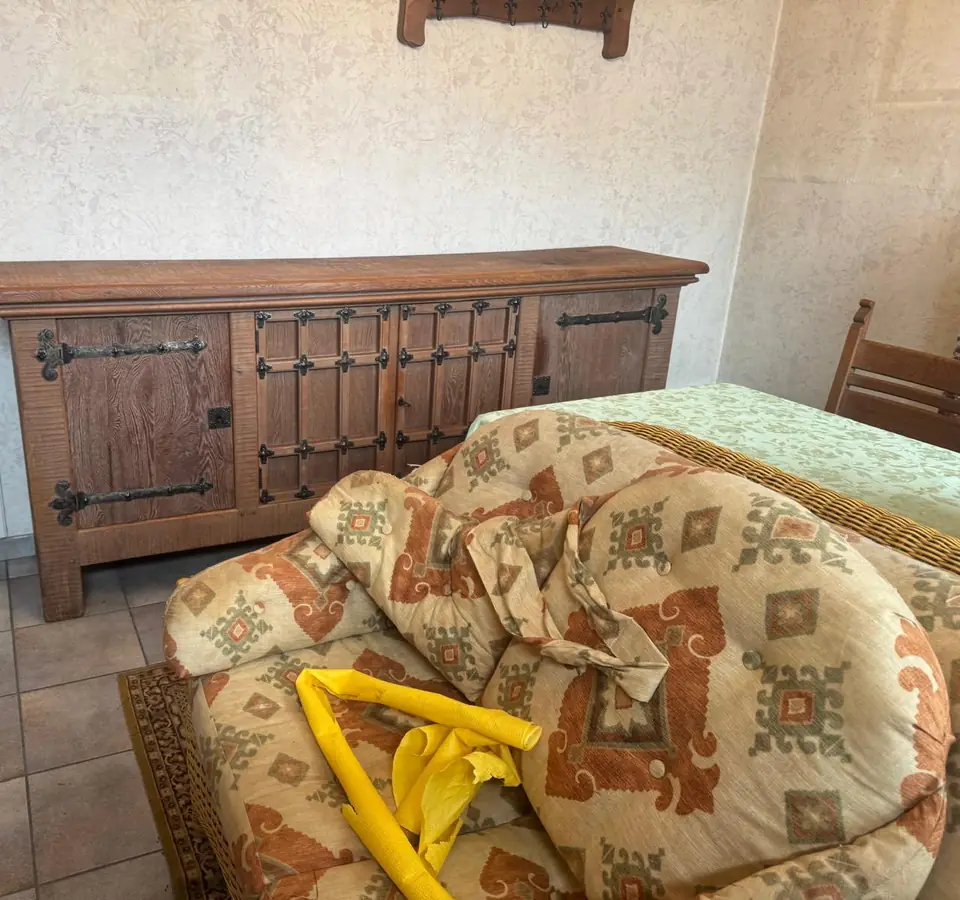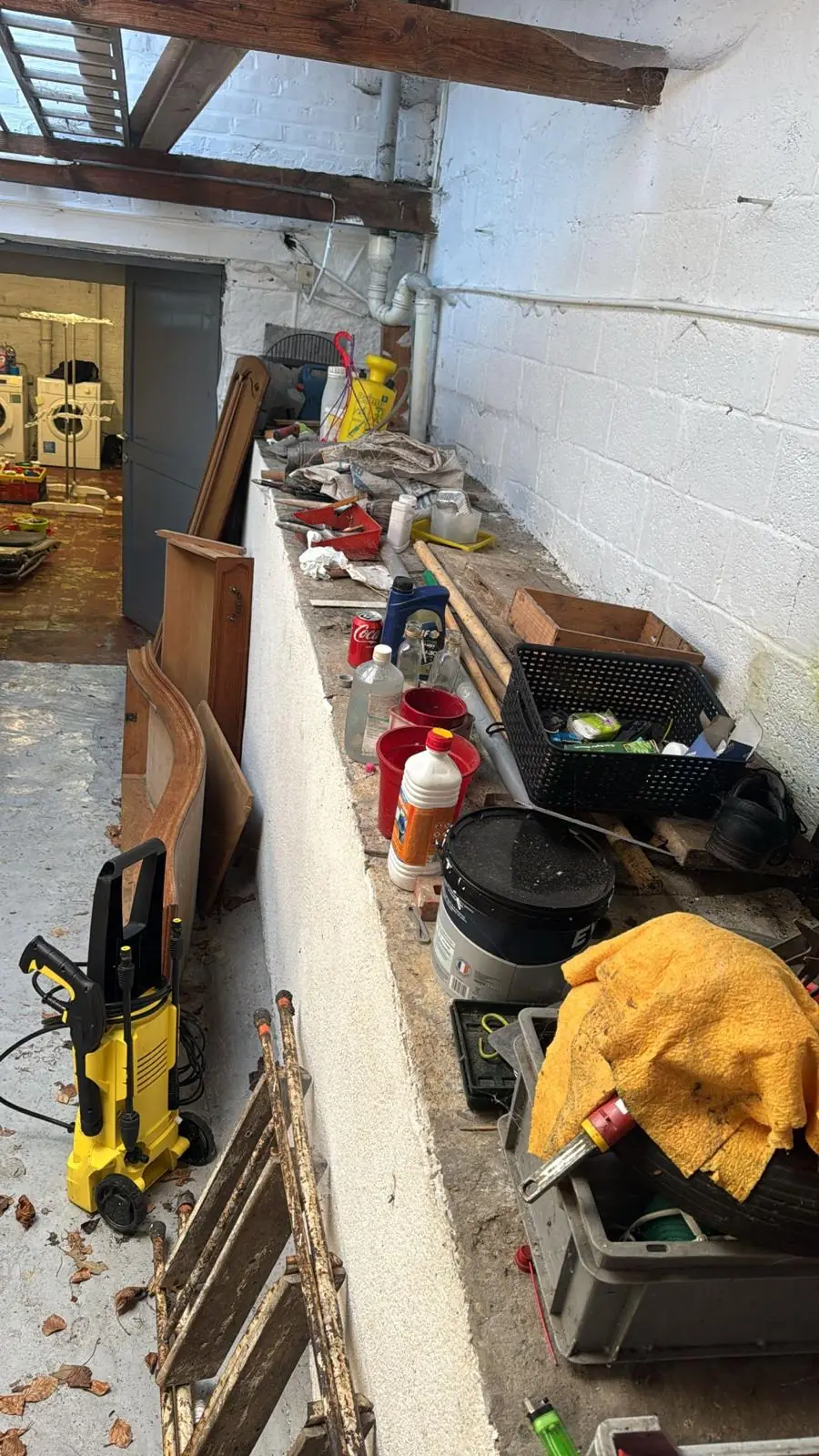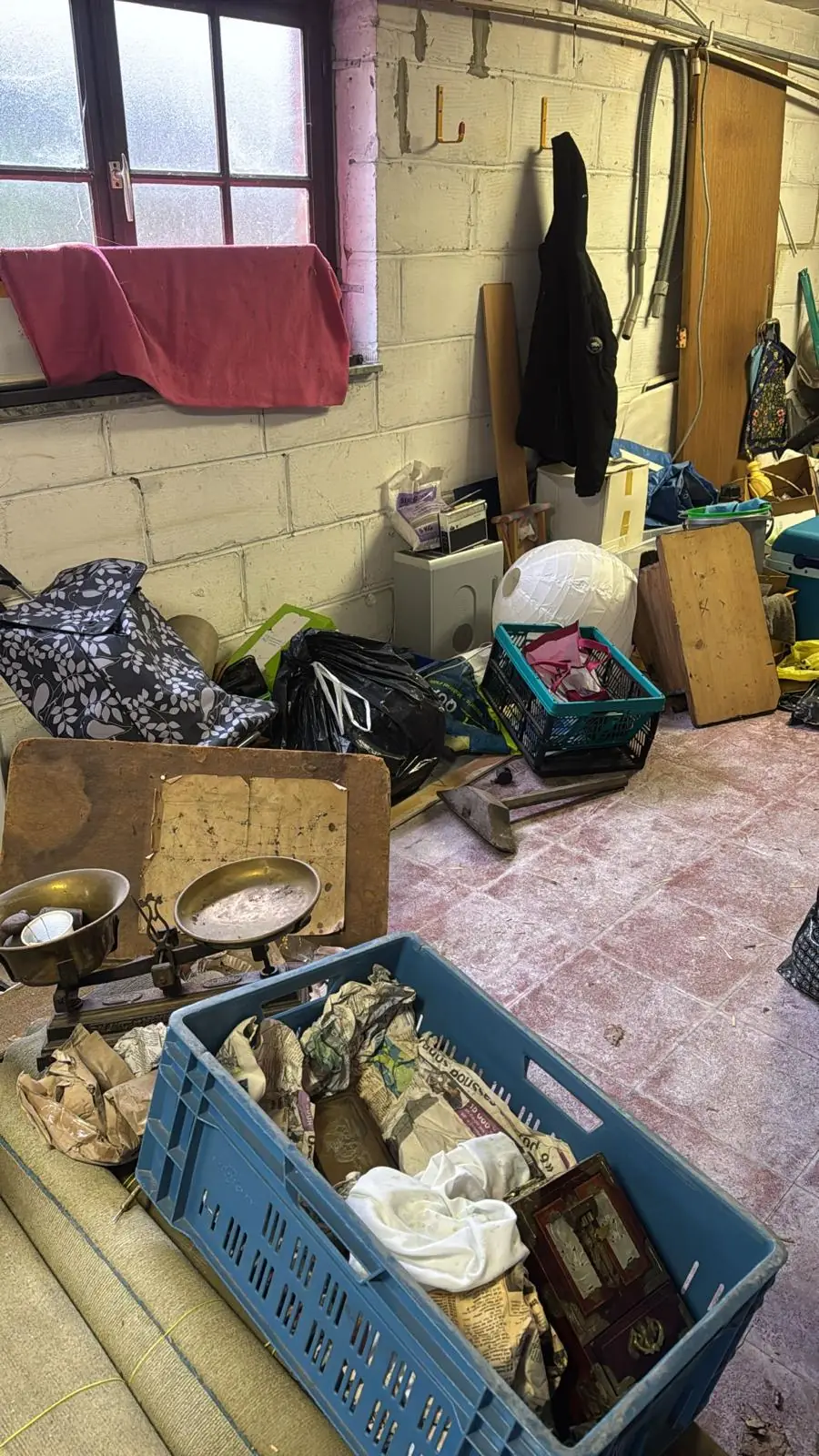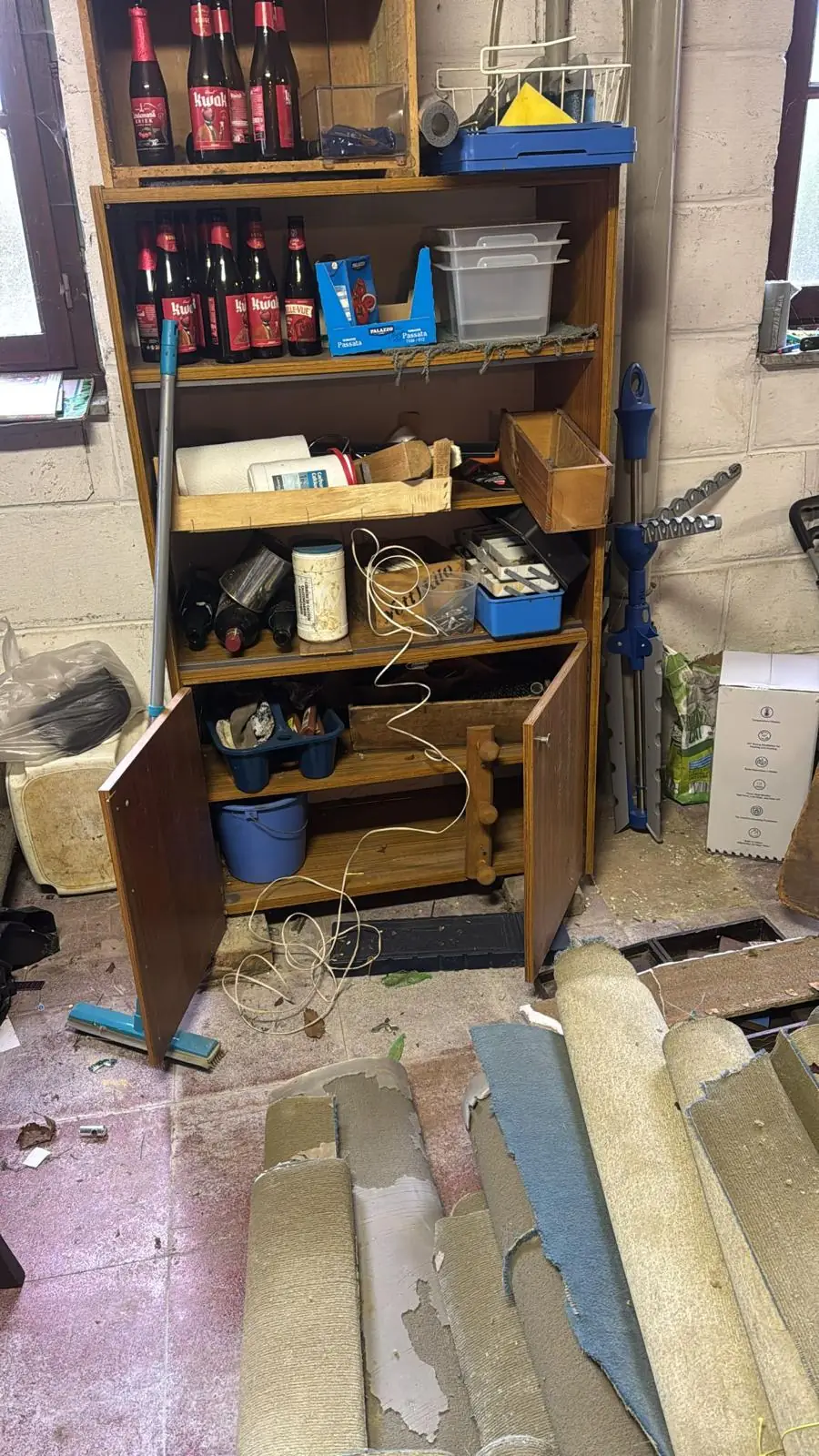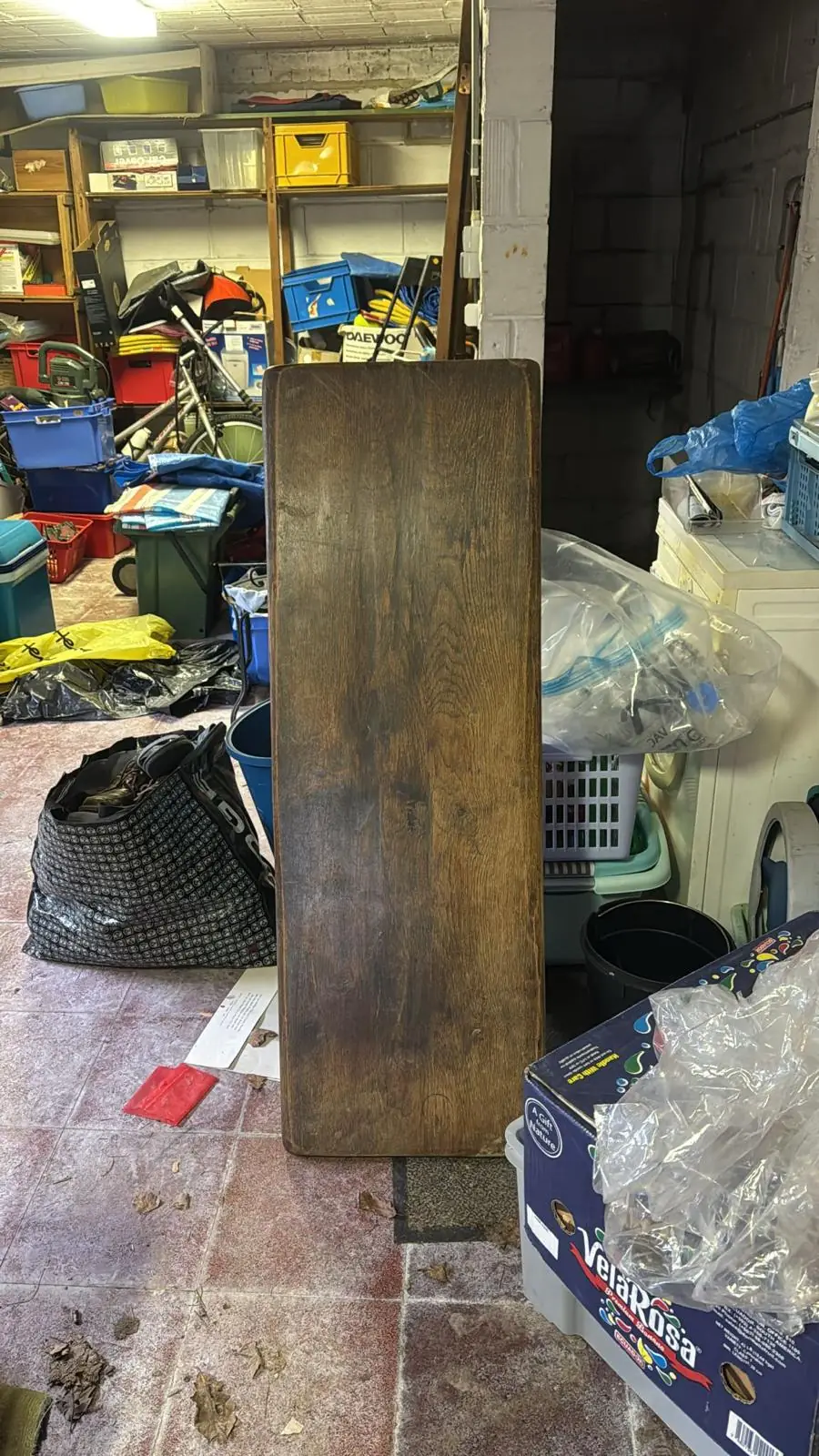
Sparkling Services provides garage clearance in Brussels, Flanders and Wallonia: the garage of a house, a lock-up in a residential car park, a garden shed or a workshop corner. We take everything out, resell or donate tools and equipment that are still useful, keep tyres, oil, paint and batteries apart, and leave the space empty and swept. Assessment free from photos or on site; depending on the value of your tools, the clearance can be free, we can pay you the difference, or you pay a fixed price on quotation.
What a garage clearance includes
A garage is not like any other room. First it holds the car, then everything that has no place in the house: grandfather's workbench, the winter tyres, cans of oil, bikes the children outgrew long ago, a lawnmower that no longer starts, the spare freezer. After a few years the car often ends up parked outside. Our garage clearance resets the space, with sorting designed for exactly this kind of content.
- House garage: attached or at the end of the garden, with an up-and-over or sectional door, usually the fullest.
- Lock-up or enclosed space in an apartment car park: ramp access, limited headroom, badge or remote, co-ownership rules.
- Row of garages: a lock-up rented or bought separately, sometimes far from home, often without electricity.
- Garden shed and workshop corner: garden tools, salvaged timber, garden chemicals, a workbench fixed to the wall.
In practice we dismantle shelving and the workbench if you wish, take every item out, set aside what has resale or reuse value, isolate hazardous products and load the rest by category. The floor is then swept. Whatever you want to keep stays where you tell us.
How much does a garage clearance cost?
We do not publish a rate, because a garage can hold anything from a few worthless boxes to a complete set of resaleable tools. The price therefore depends on what is inside, and there are three possible outcomes:
- Free clearance: the value of the tools, machines, bikes or resaleable parts covers the cost of the work. You pay nothing.
- We pay you the difference: if that value exceeds the cost, for example with a well-equipped workshop or a scooter in working order, we pay you the difference.
- Fixed price on quotation: when the contents have little value, you pay a fixed price, given in writing before the job and unchanged on the day.
The garage is the part of a home where the first option comes up most often: branded power tools, clamps, spanner sets, compressors or welders find buyers easily. Worn tyres, half-used paint tins or a broken freezer, on the other hand, have no value and need a dedicated disposal route, which is reflected in the quote.
What changes the quote
- The total volume and the share of resaleable items.
- The number of tyres, cans and products that need a separate collection.
- Heavy items: a solid workbench, an anvil, a full tool chest, a freezer.
- Access: a basement lock-up, a narrow ramp, limited headroom, the distance to the truck.
A few photos sent by WhatsApp or through the form are usually enough: show the whole garage, the shelving, the workbench and the access. We usually reply within 24 hours with an estimate, followed by a free, no-obligation written quote.
Tools, DIY equipment and bikes: what keeps its value
A well-stocked garage often hides more value than people expect. Before we talk about waste, we look at what can be resold or reused, because that is what makes your clearance free or puts money back in your pocket.
- Power tools: drills, drivers, circular saws, sanders, grinders, routers, especially complete and working.
- Quality hand tools: spanner and socket sets, planes, chisels, clamps, spirit levels.
- Workshop machines: compressor, welder, mitre saw, pillar drill, a sturdy workbench.
- Two-wheelers: rideable or easily repaired bikes, children's bikes, trailers; an old scooter or moped is assessed case by case, depending on its condition and papers.
- Garden: hand tools, hedge trimmer, brush cutter, garden furniture in good condition.
- Materials: good timber, unopened boxes of tiles, sorted hardware.
What works but will not sell is offered to social-economy organisations (for example De Kringwinkel, Les Petits Riens or Terre), depending on what they accept. Bike workshops and reuse centres are glad to take frames and parts. Metal that cannot be reused (rusty tools, steel shelving, wheel rims) goes to metal recycling.
One tip: do not throw anything away yourself before we come. A toolbox that looks ordinary to you can tip the balance of the quote.
Oil, paint, solvents, batteries: the hazardous waste in a garage
This is the big difference between a garage and any other room: it stores products that must never go out with ordinary waste. We identify them during sorting, keep them in their original containers where possible and never mix them.
- Engine oil and used oil: closed cans, sent to used-oil collection.
- Paint, varnish, wood stain, glue: half-used or dried-out tins, kept apart from solvents.
- Solvents and car-care products: white spirit, thinners, antifreeze, brake fluid.
- Garden chemicals: weedkillers, fertilisers, insecticides, often out of date.
- Batteries: car batteries, cordless tool packs, household batteries, each into the right collection.
- Gas cylinders: propane or butane from the barbecue, blowtorch canisters; they go back into the suppliers' return circuit or to a suitable collection point.
These products go to the recycling park or a specific collection, depending on the region and the product. An unlabelled can is treated as hazardous by default: mention it at the assessment so that its handling is planned in the quote.
Fibre-cement sheets on the garage or shed are a separate case: see the section on asbestos cement below.
Fibre-cement sheets and asbestos cement
Corrugated sheets on the garage roof, flat cladding on a shed, planters, old flue pipes: in buildings dating from before 2001, fibre cement often contains asbestos cement. As long as these elements are intact and nobody works on them, the risk stays limited; breaking, sawing, drilling or pressure-washing is what releases fibres.
What we do, and what we do not
- We never dismantle, break or take away fibre-cement sheets, even ones lying on the floor or already taken down.
- We clear the rest of the garage by working around them, without rubbing or knocking them.
- We point out anything that looks suspect: sheets, gutters, planters, seals or rope gaskets from old stoves.
Who handles it then?
For a whole roof or damaged materials, call in a firm certified for asbestos removal. For small quantities of intact sheets brought by a private individual, some recycling parks accept wrapped asbestos cement, under conditions that vary by region and by inter-municipal waste company (quantity, packaging, prior registration): check before you go. In Flanders, an asbestos certificate (asbestattest) is also required when selling a building constructed before 2001; if you are selling, it already shows where the materials concerned are.
Tyres, freezers, lawnmowers and heavy items
Some garage items have their own disposal circuit, and handling them properly is what makes a clearance well done.
- Tyres: with or without rims, they do not belong in an ordinary skip, let alone in nature. They go into the tyre take-back system, through garages and collection points that accept them. Metal rims are recycled separately.
- Freezer, fridge, spare washing machine: these appliances follow the Recupel route, which organises the recycling of electrical appliances in Belgium; refrigerant gases from freezers are recovered correctly this way.
- Petrol lawnmower, brush cutter, leaf blower: we drain fuel and oil before transport; the liquids join the hazardous-waste collection, and the machine is resold if it runs or recycled if not.
- Workbench, steel cabinet, anvil, safe: dismantled where possible, moved out with a hand truck, straps and padding, without damaging the garage door or threshold.
- Car parts: rims, bumpers, seats, roof racks; metal goes to recycling, the rest by material.
Still a car, motorbike or wreck in the garage? We do not take it ourselves, but we organise the clearance around it: see the next section.
A car, motorbike or wreck in the garage
An old car under a cover, a motorbike that has not run for years, a scooter with a dead battery: a vehicle often holds up the whole garage clearance. We do not take vehicles ourselves, because the end of a vehicle's life follows its own procedure. We do, however, organise the clearance around it and point you in the right direction.
Three situations
- The vehicle runs or can be repaired: it can be sold, by you or through a motor trade professional. Its value is not part of our quote.
- The vehicle is end-of-life: it must go to an authorised vehicle dismantler, which issues a certificate of destruction. Many dismantlers collect it with a tow truck.
- The vehicle is still registered: the number plate must be deregistered with the DIV, after which the insurance can be stopped. Have the registration certificate, the certificate of conformity if you have it, and the keys ready.
How we coordinate
The simplest approach is for the vehicle to be collected on the day of our clearance, once access is clear, or just before. We free up the space around it, take out loose parts, tyres, batteries and cans, and the dismantler only has to leave with the vehicle. Papers found in the glovebox are set aside for you. With an estate, check beforehand who is entitled to sign the deregistration and handover documents.
Clearing a lock-up in a residential car park
A lock-up in an underground car park or a row of garages comes with its own constraints, which are often underestimated. We check them before fixing a date.
- Headroom: most car parks limit vehicle height. Our truck then stays at street level or by the entrance, and items are brought up with a trolley or a lower van.
- Badge, remote, key: make sure the car-park door and the lock-up can be opened throughout the job, or that someone is on site.
- Co-ownership rules: some managing agents set hours for works or forbid blocking the driveways. We work without obstructing other spaces and leave nothing in the common areas.
- No electricity: many lock-ups have neither socket nor light; we bring our own lamps.
Selling your flat together with its lock-up, or planning to rent the lock-up out? An empty, swept space is easier to show and can be handed over on the agreed day. If the managing agent needs to be informed, we give you the expected duration and the type of vehicle so you can pass it on.
Garden shed and workshop corner
The garden shed is often an extension of the garage: garden tools, opened bags of compost, terracotta pots, garden furniture, firewood, the barbecue and its gas cylinder. Its narrow door and the path through the garden mean we protect the lawn and paving during the trips back and forth.
The workshop corner, at the back of the garage or in the basement, tends to hold heavy machines, offcuts of wood, boxes of screws and nails, electric cable and lots of small containers. That is where sorting takes the most time, and often where the value is hidden.
- Broken plastic or resin garden furniture is recycled; wooden or metal pieces in good condition are resold or donated.
- Green waste left in the shed (prunings, bags of leaves) can go with the rest, sorted separately.
- A sectional wooden shed can be taken down if it is empty and sound; a fibre-cement roof stays in place (see above).
Timing and how the job runs
- Photos or visit. You send a few photos of the garage, the shelving and the access. If needed, we usually visit within 48 hours; the assessment is free.
- Written quote. The quote states the option that applies (free, we pay you, fixed price) and the items that need a dedicated route.
- On-site sorting. You show us what you are keeping; we separate resale, donations, recycling and hazardous waste.
- Loading and removal. Everything leaves in one go when the volume allows.
- Garage swept. The space is handed back empty; if you are away, you receive a photo.
A single garage is usually cleared in a few hours, a garage with a workshop or a very full lock-up in about a day. You do not need to be there as long as someone can let us in and the items you are keeping are clearly set apart.
Checklist before your garage clearance
- Set aside what you are keeping: a marked corner or a tarpaulin is enough, or a list with photos.
- Collect the paperwork: tool invoices, manuals, vehicle registration papers, documents in the workbench or the car.
- Spot unlabelled products and report them, without opening or mixing them.
- Do not drain lawnmower or generator tanks yourself: we do it under proper conditions.
- Think of keys and badges: up-and-over door, padlock, car park, shed.
- Tell the managing agent or neighbours for a lock-up in a co-owned building or a shared driveway.
- Mention resaleable items you know about (brand, condition): it sharpens the estimate.
Before selling a house, an empty garage lets the buyer check the floor, walls and door. Before renting out a lock-up, it is the condition for handing it to the tenant.
Just the garage, or the whole house?
A garage clearance works perfectly well on its own. But it often comes with other needs: selling the house, an estate, a move. In that case Sparkling Services can combine the garage with a house clearance, a basement and attic clearance or an estate clearance on a single quote, in one visit. For just a few items (an old fridge, some tyres, a patio set), our junk removal service is a better fit. And if the property has to be handed back clean after clearing, an end-of-tenancy clean can follow.