Updated on · 8 min read · by the team at Sparkling Services
In Belgium, houses are usually sold empty: the buyer expects the property to be free of furniture by the day the deed of sale is signed at the notary's office at the latest. The smart move is to sort and clear before viewings, or at least between the preliminary sale agreement and the deed. This guide explains when to clear, how to organise it and what a professional house clearance costs.
Do you have to clear a house before putting it on the market?
You don't need an empty house to list it, but the property must be vacant by the date set in the preliminary agreement (compromis / compromis de vente), normally the day the notarial deed is signed. Unless something else is agreed in writing, the buyer expects an empty, swept house with nothing left in the cellar, loft, garage or garden.
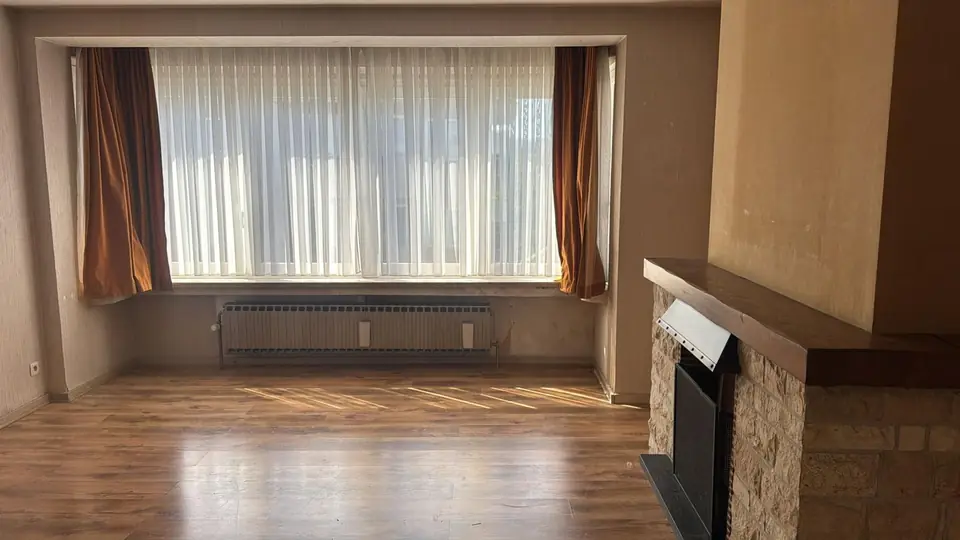
In practice, sellers choose between two approaches. Clearing before viewings makes rooms look larger, lets buyers see the true condition of walls and floors, and produces much better listing photos. Selling furnished and clearing between the preliminary agreement and the deed lets you keep living in the house, but squeezes the timeline.
One thing to watch: anything you leave behind without a written agreement can lead to a dispute. If the buyer wants to keep certain furniture, the fitted kitchen or the garden shed, have it recorded in the agreement. Otherwise, assume the property must be handed over completely empty.
What timeline should you plan between listing and the deed?
Allow at least two to three weeks between the end of family sorting and the deed date, so there is time for the clearance, a final clean and a last walk-through. In Belgium the notarial deed is usually signed within four months of the preliminary agreement. That is plenty of time, as long as you don't leave everything to the final week.
A typical timeline, to adapt to your situation:
- Before listing: set aside important papers, photos and valuables; order the mandatory certificates (see below).
- Before the first viewings: partial or full decluttering, at least of overcrowded rooms, the cellar and the loft.
- After the preliminary agreement: clearance survey visit, fixed quote, date booked.
- Three to four weeks before the deed: request a parking suspension if needed, cancel contracts you no longer need.
- One to two weeks before the deed: full house clearance, followed by cleaning.
- A few days before the deed: read the meters, final visit with the buyer if planned, keys ready for completion day.
A professional clearance of a full house usually takes 1 to 3 days, depending on volume and access. A survey visit can often be arranged within 48 hours.
Notary, estate agent and clearance: who does what, and when?
Before a sale, the clearance fits between two parties who each have their own schedule: the estate agent, who arranges viewings, and the notary, who prepares the deed. The simplest approach is to name one person who centralises information and to share the key dates with us.
With the estate agent
- Decide whether the house is emptied before viewings, partly decluttered or sold furnished.
- Give them the clearance date so that no viewing is booked that day.
- Arrange the keys: the agency can let us in in the morning and collect the keys at the end of the job, if you wish.
- Send them the photos of the empty house, which help with the rest of the marketing.
With the notary
- Check in the sale agreement (compromis) what is sold with the house (fitted kitchen, light fittings, furniture left for the buyer): those items stay in place and are marked as such on our quote.
- Place the clearance in relation to the expected deed date, leaving time for cleaning and a possible visit by the buyer.
- If the property is part of an estate, check with the notary that all heirs agree to the clearance before setting a date.
With us
We need the address, access details, the list of what stays and the deadline. In return you receive a fixed quote, a date confirmed in writing and, at the end, photos of every empty room that you can forward to the agent or the notary. Meter readings and handing the keys to the buyer remain your responsibility or the agency's.
Which certificates are linked to the sale?
Sellers must provide several certificates, and some of them require the inspector to reach every room: clearing first makes their job much easier. Requirements differ by region; your notary or estate agent will tell you exactly what applies to your property.
| Document | Region | Why clearing helps |
|---|---|---|
| Energy performance certificate (EPC / PEB) | Brussels, Flanders, Wallonia | The assessor needs to see windows, insulation, boiler and radiators |
| Electrical installation inspection | All of Belgium | The fuse box, sockets and circuits must be accessible |
| Asbestos certificate (asbestattest) | Flanders, buildings built before 2001 | The inspector also checks cellars, lofts, garages and outbuildings; cluttered spaces slow the inventory down |
| Soil certificate (bodemattest / attestation du sol) | Flanders and Brussels | Administrative, but an old heating-oil tank in the cellar must be declared |
Also gather the documents the buyer and notary will ask for: title deed, plans, invoices for works, warranties for appliances that stay, the boiler manual. Put them in a clearly labelled box before the clearance so they don't leave with everything else.
How do you sort a house efficiently before clearing it?
The simplest method is four categories: keep, share with family, donate, dispose. Anything not marked "keep" or "share" can go with the clearance team on the day.
- Keep: official papers, photos, jewellery, keepsakes and anything moving to your next home. Gather them in one locked room or take them away beforehand.
- Share: if several relatives are involved, set a deadline for everyone to collect what they want. After that date, items join the general sort.
- Donate: furniture, crockery, linen, books and appliances in good condition. These can go to charities and social-economy organisations (for example Les Petits Riens, Oxfam, Terre or the Kringwinkel network in Flanders), depending on what they accept.
- Dispose: broken items, worn mattresses, rubbish and bulky waste. These are sorted and recycled through suitable channels (recycling parks, sorting centres).
Coloured stickers on furniture and boxes are the most reliable way to stop something precious leaving by mistake. Lock the "keep" room, or empty it completely, before the team arrives.
What happens to the furniture and belongings?
At Sparkling Services, the value of reusable or resaleable items is deducted from the price of the clearance; what can be used again is resold or donated to reuse charities, and the rest is sorted by material and recycled through suitable facilities (recycling parks, sorting centres). Depending on the contents of the house, the clearance can be free, or we pay you the difference if the value of the items exceeds the cost of the clearance. The calculation is set out in writing in the quote.
In practice, the team separates reusable furniture, wood, metals, electrical and electronic equipment, textiles, paper and cardboard, and residual waste. Hazardous products such as paint, solvents and chemicals follow a dedicated route. Asbestos is never removed as part of an ordinary clearance: it must be handled by a certified asbestos removal company.
For a particularly valuable item, such as artwork, a collection or jewellery, you can also have it appraised by an independent expert and sell it yourself before the clearance, for example through an auction house. Simply remove it before we arrive.
How much does it cost to clear a house before selling?
The cost of a house clearance depends mainly on volume, and the value of reusable items is deducted: the clearance can be free, we can pay you the difference, or you pay a fixed price on quotation. The survey visit is free, an estimate from photos is also possible, and the quote is fixed: the amount quoted does not change on the day.
The main factors that affect the price:
- the total volume, from cellar to loft, including garage and garden shed;
- access: upper floors without a lift, narrow staircases, distance from the door to the van;
- the share of reusable items compared with waste that must be processed;
- specific waste such as paint tins, tyres or chemicals;
- extras such as dismantling a kitchen or built-in wardrobes, or a final clean.
Thorough family sorting before we arrive reduces the volume and therefore the bill. Leaving things "just in case" often means booking a second visit, which costs more than one well-prepared clearance.
Practicalities: parking, keys and an empty house
For a clearance in town you often need to reserve a parking space for the van; Sparkling Services can apply to the municipality on your behalf. In Brussels each of the 19 municipalities handles its own road-space reservations; in Flanders and Wallonia the request also goes through the municipality or the local police. Depending on the municipality, the no-parking signs are put up either by the municipality itself or by the applicant. Apply well in advance.
If you no longer live in the house or live far away, you can hand us the keys: we work without you being present and send you photos before and after. A photo record is also useful for your estate agent.
An empty house comes with a few specific risks. Tell your home insurer if the property will stand empty for several weeks, as some policies restrict cover for prolonged vacancy. Keep minimal heating on in winter to prevent frozen pipes, and have the post collected regularly. If the sale drags on, check whether your municipality applies a vacancy register or a tax on long-term empty properties.
Checklist: clearing your house before sale in ten steps
- Agree with the notary or estate agent on the date the property must be vacant.
- Order the required certificates (EPC, electrical inspection, asbestos certificate in Flanders if applicable).
- Set aside all documents relating to the house and the sale.
- Organise how belongings are shared among relatives, with a deadline.
- Have any valuable items appraised separately.
- Request a survey visit and a fixed clearance quote.
- Book the clearance date and, if needed, the parking suspension.
- Clear the whole house, including cellar, loft, garage and garden.
- Have the property cleaned for a spotless handover.
- Read the meters and gather every key for the day of the deed.
Need help with any of these steps? Contact Sparkling Services on +32 485 39 99 41 or through the contact form. We work in Brussels, Flanders and Wallonia, in English, French and Dutch.
Frequently asked questions
When does a sold house have to be empty?
By the date in the preliminary sale agreement, usually the day the notarial deed is signed. Plan the clearance one to two weeks before that date so you have a margin for the unexpected and time to have the house cleaned before handing over the keys.
Can I leave furniture for the buyer?
Yes, if the buyer agrees and it is recorded in writing, for instance in the preliminary agreement. Without a written agreement the buyer can insist that everything is removed, and the cost of a clearance organised after the deed can quickly become a point of dispute.
Does an empty house sell better?
An empty, clean house lets buyers judge the space, the condition of walls and floors and the potential of each room, and listing photos are clearer. If you still live there, partially decluttering overcrowded rooms, the cellar and the loft is often a good compromise.
Can the clearance take place without me?
Yes. You give us the keys and clearly agree what must stay behind. We send photos before and after the work. This is common when the house is already empty or the sellers live far away, including abroad.
Can the value of the furniture lower the price?
Yes. The value of reusable or resaleable items is deducted from the clearance price. If it covers the cost, the clearance is free; if it exceeds it, we pay you the difference. Otherwise you pay a fixed price on quotation, based on volume, access and sorting. Whatever cannot be resold is donated to reuse charities or recycled through suitable channels (recycling parks, sorting centres).
Should I tell the notary the clearance date?
It is not compulsory, but it helps: the notary can confirm that the clearance leaves enough time before the deed and, if the property is part of an estate, that all heirs agree. Share the date as soon as it is set, with the estate agent too.
What about furniture the sale agreement leaves for the buyer?
It stays. Point it out during the estimate visit: we note it on the quote as not to be removed, and the crew leaves it in place on the day. If you are unsure what is sold with the house, reread the sale agreement or ask the notary.
Can the estate agent hand you the keys?
Yes, if you authorise it. The agency can let us in in the morning and take the keys back at the end of the job; we send the photos of the empty house to the agency or to you. Let the agency know the date so that no viewing is booked that day.